Free shipping to Republic Ireland (ROI) - All orders dispatched same day
Official Distributor


Authorized partner for premium quality products
REA & SREA Electronic Actuator Failure: Symptoms, Causes & FAQ
02/16/2026
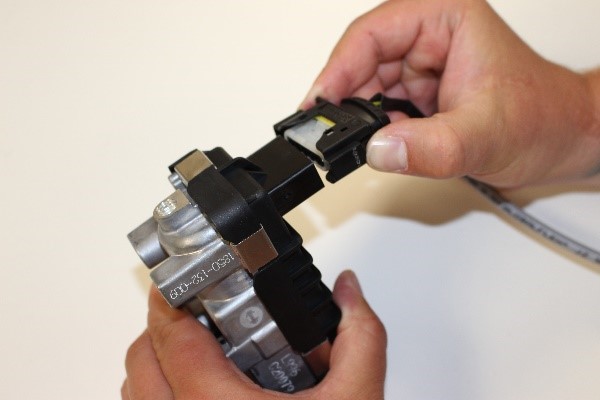
REA (Rotary Electronic Actuator) and SREA (Simple Rotary Electronic Actuator) electronic actuators are fitted to a variety of different variable geometry turbos and control the variable vane movement. The following questions provide answers to common REA/SREA issues.
What are the symptoms of possible electronic actuator failure?
There are a few factors which determine an actuator failure:
- Flashing engine management light
- A complete loss of power, causing the vehicle to go into limp home mode
- Low boost
- Over boost
- Noise from the turbocharger
- Fault codes
How to identify a REA/SREA connector?
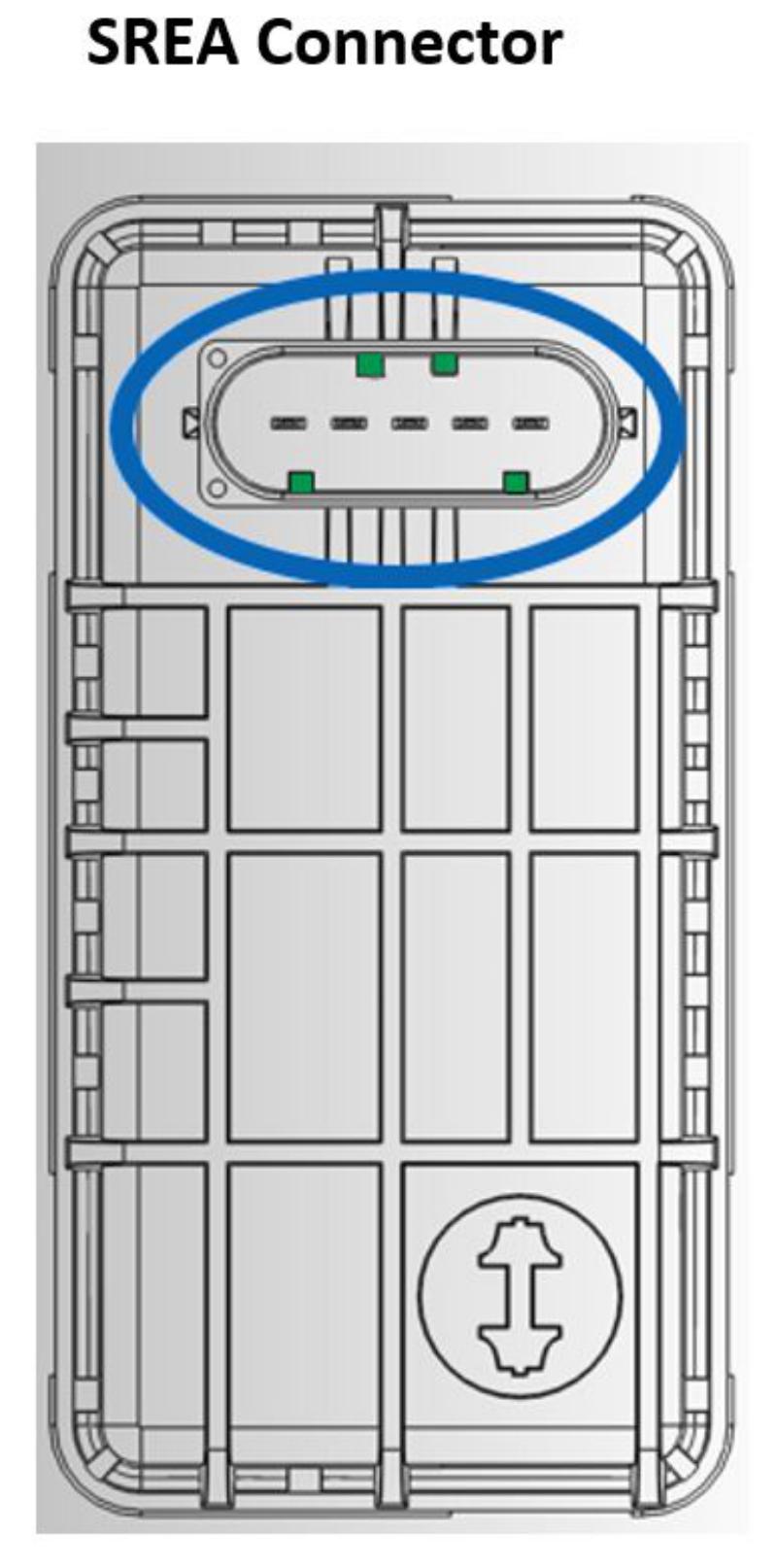
There are two types of Electronic Actuators. The two types (SREA/REA) can be identified by the different orientation of their connectors.
Please note: Avoid touching the connectors to reduce the risk of damage.
My diagnostic equipment has identified a fault with the turbocharger — is an electrical fault responsible?
Checking ECU error codes and researching these codes is critical and can help you identify the root cause very quickly. Turbos are on the same circuit as other sensors, and it may well be those at fault, not necessarily the turbo. We have seen examples of turbo faults being registered on the diagnostic tool where, upon investigation, the injectors were actually at fault.
Check the vehicle history for past issues, such as previously recorded ECU error codes and replaced engine components — especially those linked to the turbo.
With the engine turned off and cold, check if the linkage can be seen or felt between the SREA/REA (a small black box attached to the intake side of the turbo) and the bearing housing lever arm. If accessible, check for free movement at each end of the linkage — there should be a small amount of play. Also check for corrosion which may be restricting movement, and confirm the linkage is not detached at either end.
Please note: Use the locking tabs to release the electrical connector to avoid damage.
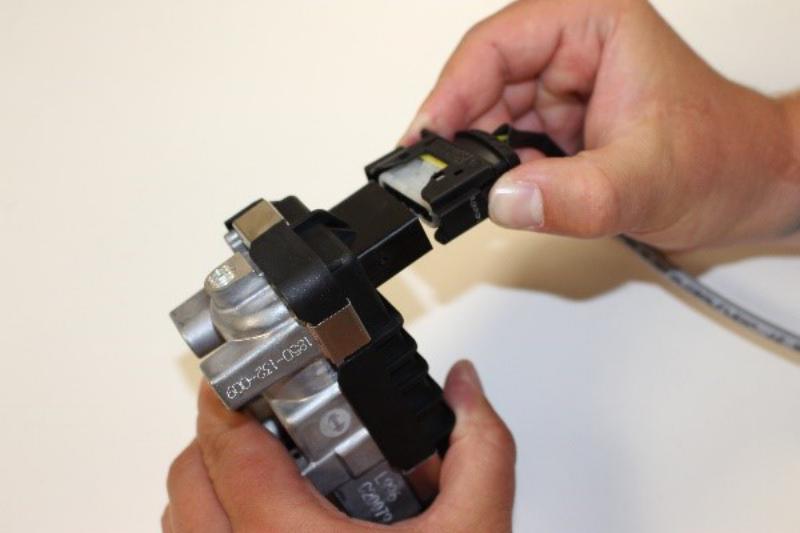
Further investigation:
- Is the REA/SREA electrical connector firmly located? Avoid pulling the wiring directly as this could cause damage.
- Are the locking tabs on the connector damaged?
- Are there signs of water ingress? Check for water or staining below the connector seal and in the REA/SREA connector (removal of the connecting wires is required to do this).
- Are the connector walls or seal damaged? Check the REA/SREA connector walls for damage or cracks.
- Are the wires within the harness connected properly and unused positions sealed?
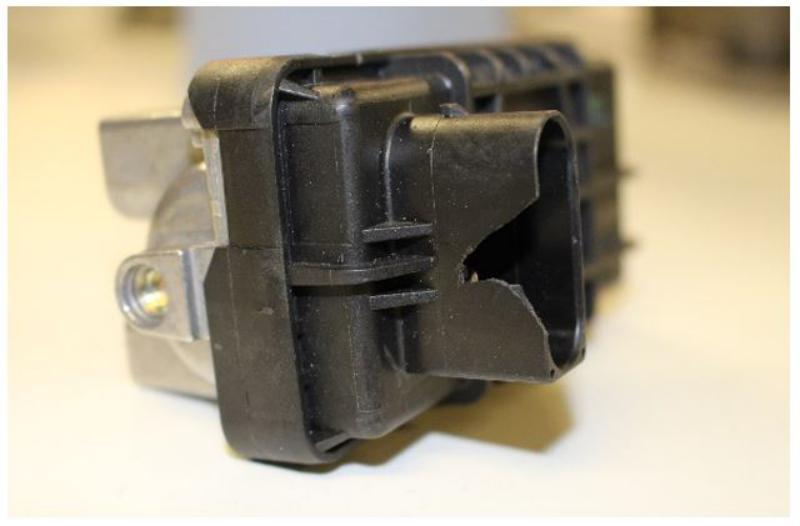
Check the REA/SREA connector wall for damage or cracks.
Finally…
- Switch on the ignition without cranking the engine — does the electronic actuator move freely? Note: some actuators will not move until the engine is running.
- Do any warning lights appear on the dashboard?
- Start the engine and again listen for actuator noise; if possible, visually check for movement of the actuator.
- Check again for any warning lights on the dashboard. If lights appear and movement of the actuator can be seen, there may be an electronic fault elsewhere on the vehicle.
- Switch the ignition off — the actuator arm should move rapidly to the "safe" position. On some occasions the actuator arm may continue its sweep to clear the nozzle vane path, depending on the application.
If the steps above have been followed and all connectors are in good condition, movement of the actuator is free, and there are no signs of water ingress, then it is highly likely the fault lies somewhere other than the turbo.
If the electronic actuator has failed, should I check the turbocharger?
It is vital to check the turbocharger even if the problem appears to be an electronic actuator-only issue.
SREA and REA actuators can fail because the variable geometry mechanism sticks due to sludging or carbon build-up. When this happens, it pulls a higher current through the motor than it is designed for, causing the motor to burn out or the plastic worm gears to fail. This restriction can reduce boost pressure and may result in the vehicle being put into limp home mode.
When repairing the electronic actuator, the worm gear and motor must be the correct ratio to avoid immediate failure. In most failures, the black cap and electronics within are unaffected by gearbox failure and can be reused.
If the actuator has failed to open the nozzle ring assembly vanes under acceleration, the turbo will also fail to operate efficiently. Vanes set to a closed position can cause choking of the engine or overspeeding of the turbine. Conversely, vanes that are open more than required will cause excessive lag and slow turbo response.
Are electronic actuators interchangeable?
SREA/REA electronic actuators are highly complex and intricate. They are not interchangeable with different gearboxes or black caps. The calibration settings are programmed in the software within the black cap and are unique to each individual turbocharger. Even loosening the retaining bolts on the actuator will take it outside of specification.
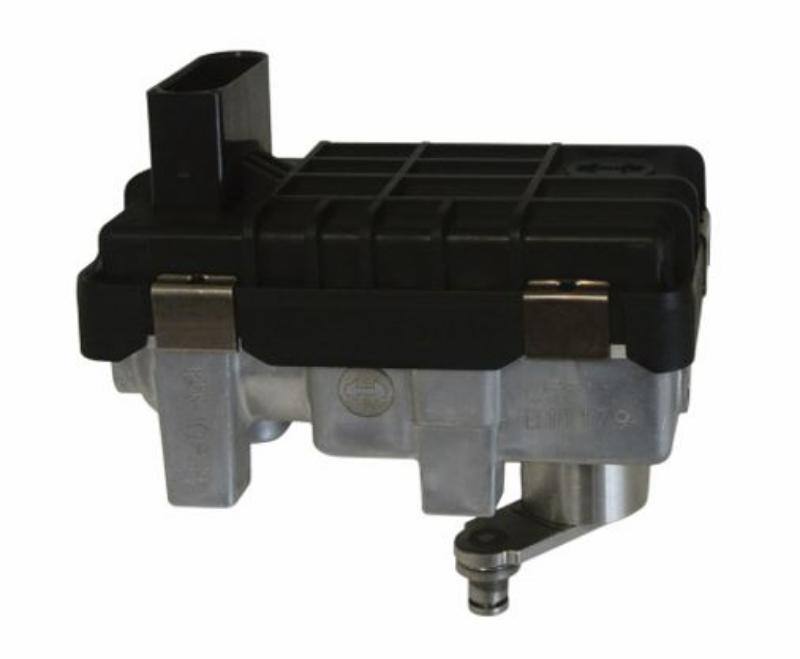
The black cap is damaged — can I repair it?
Each turbo is calibrated differently and the electronics within each cap are programmed specifically for that turbo, making it a non-serviceable part. In this instance you would need to replace the complete SREA or REA unit with the correct calibration settings. Incorrect calibration of the electronic actuator when assembled on the turbocharger can result in poor performance or complete failure.
Can I use solder to fix broken connections in the black cap?
Soldering to repair broken connections in the gearbox and black cap is not advised. Solder is susceptible to cracking in environments with temperature variance and vibration. For this reason, the motor, motor choke assembly, and connectors must not be spot welded.
What other factors can cause my actuator to fail?
Mishandling of the turbo
If the turbo connector is knocked or banged it will break, and the whole unit will need replacing.
Water ingress
The location of a turbo in the engine compartment can make the electronic actuator susceptible to water ingress. The actuator can become rusty and contaminated, giving incorrect signals and ultimately failing.
Board connectors
The wire connectors can expand and contract over time, eventually breaking and causing actuator failure. This fault can often go undetected during repair and workshop testing, as it may only become apparent once a temperature change occurs.
Engine vibration
Constant vibration from the vehicle can gradually wear the electronic actuator out, causing it to fail over time.
Get in Touch – We're Here to Help
Have questions? Our experts are ready to assist you!