Free shipping to Republic Ireland (ROI) - All orders dispatched same day

Official Distributor


Authorized partner for premium quality products
Turbo Compressor Wheel Evolution: From Flatback to Extended Tip
02/18/2026
Turbochargers have come a long way in recent years. With modern engines demanding higher performance, turbochargers are spinning faster than ever and operating under extreme temperatures. This evolution has driven significant advancements in compressor wheel design to handle these more demanding conditions.
Flatback: The Original Design
The Flatback compressor wheel is one of the earliest designs in turbocharging. While simple, it laid the foundation for modern wheel development and is still used by some manufacturers today.
Stepped Back: Strengthened for Durability
The Stepped Back design was a small but important improvement over the original flatback. Its primary purpose was to reinforce the compressor wheel, adding strength to withstand higher loads. However, this design is now rarely used in modern turbocharger applications.
Superback: Reinforcing for Speed
As turbochargers began spinning at higher speeds, the Superback design emerged. The increased rotational speed puts tremendous force on the compressor wheel, particularly at the exducer—the outer edge of the wheel that rotates fastest. The Superback design reinforces the back face of the wheel, preventing it from tearing under stress and improving reliability under extreme conditions.
Deep Superback: Meeting Modern Demands
The Deep Superback is an exaggerated version of the Superback, used in many recent turbo applications. With increasing rotational speeds in modern engines, this design provides even greater durability and performance.
Deep Superback – Extended Tip: Boosting Efficiency
The Deep Superback with Extended Tip goes a step further by optimizing airflow. This design allows for faster boost response at lower engine speeds while maintaining efficiency at higher boost pressures. By effectively amplifying the performance of a smaller wheel, extended tip technology enables smaller turbochargers to perform like larger ones, delivering better airflow and boost capabilities.
Other Compressor Wheel Designs
Threaded Wheels
- Features threads that extend all the way up the shaft
- Ideal for applications with increased load
- Eliminates the need to source a separate shaft nut
Boreless Wheels
- Threads extend only halfway up the shaft
- Provides added strength for high-load applications
- A stronger, more durable design for modern turbochargers
Conclusion
From flatback to deep superback with extended tips, compressor wheel designs have evolved to meet the extreme demands of today's turbocharged engines. Understanding these designs helps automotive enthusiasts and engineers appreciate how modern turbos achieve higher speeds, improved efficiency, and greater durability.
Blocked DPF Causes Turbo Failure: Symptoms & Prevention Guide
02/18/2026
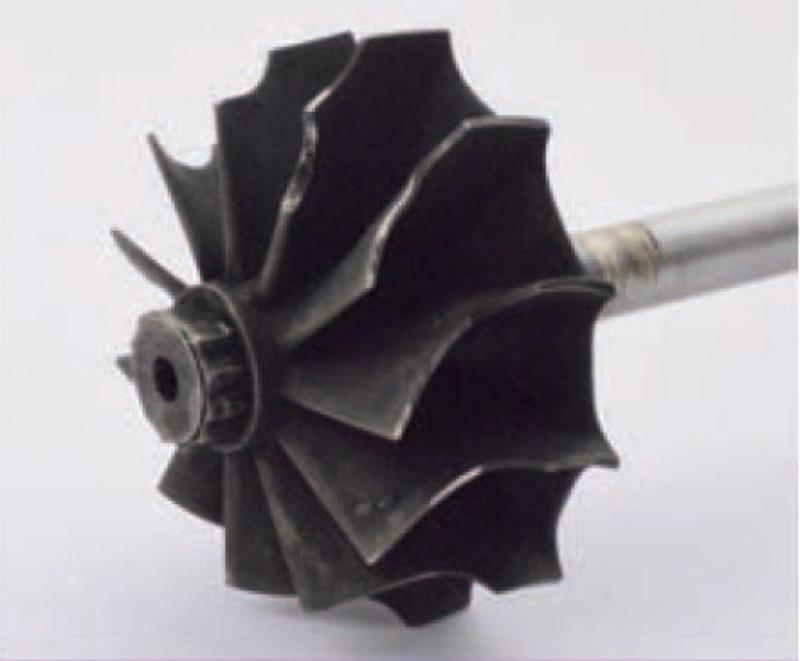
There are many articles and technical documents relating to how a faulty turbo can lead to DPF damage. However, the DPF is actually responsible for more turbo-related failures than you might think. Here we explore what effect a blocked DPF can have on a turbocharger.
DPFs (Diesel Particulate Filters) were first introduced in January 2005 with the Euro 4 emission standard, where diesel particulate levels were reduced to extremely low levels to reduce the allowable amount of particulate matter (PM) released into the atmosphere. Reducing the size of PM from the combustion process to this level was not technically possible, so this meant all diesel vehicles after September 2009 were fitted with a filter to capture soot and other harmful particles, preventing them entering the atmosphere. A DPF can remove around 85% of the particulates from the exhaust gas.
A blocked DPF will not work correctly. To clear this blockage there are two types of regeneration which are commonly used to remove the build-up of soot. Newer vehicles engage active regeneration, which is the process of removing the accumulated soot from the filter by adding fuel post combustion to increase exhaust gas temperatures and burn off the soot, providing a temporary solution. Passive regeneration takes place automatically on motorway-type runs when the exhaust temperature is high. Many manufacturers have moved to using active regeneration as many motorists do not often drive prolonged distances at motorway speeds to clear the DPF. Constant short distances are not good for the turbo or exhaust system.
So, what happens to the turbo when a DPF is blocked?
A blocked DPF prevents exhaust gas passing through the exhaust system at the required rate. As a result, back pressure and exhaust gas temperatures increase within the turbine housing. Increased exhaust gas temperature and back pressure can affect the turbocharger in a number of ways, including:
- Problems with efficiencies
- Oil leaks
- Carbonisation of oil within the turbo
- Exhaust gas leaks from the turbo
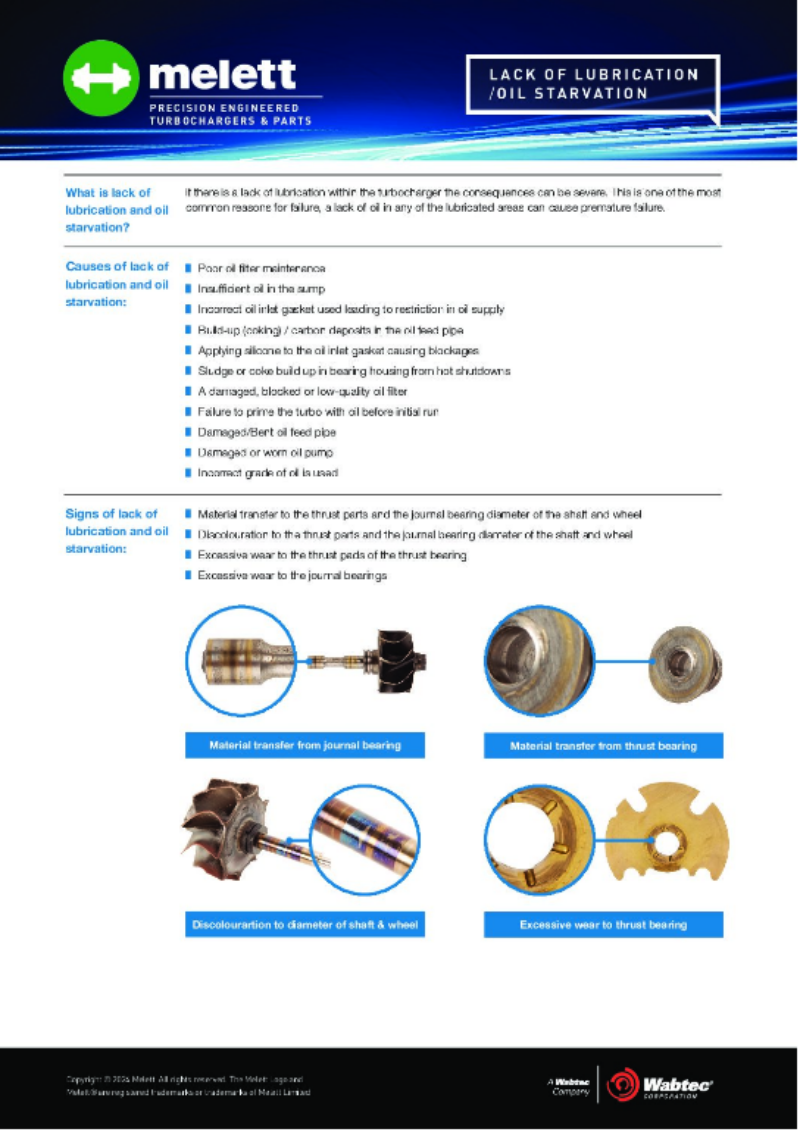
How to spot a turbocharger that has suffered from DPF problems:
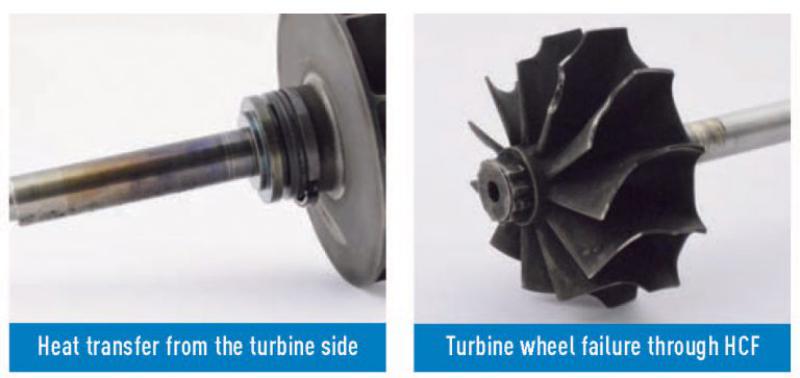
Discolouration of parts within the core assembly (CHRA)
Usually with evidence that the heat is transferring through the CHRA from the turbine side. This excessive temperature within the CHRA is caused by back pressure forcing the exhaust gas through the piston ring seals and into the CHRA. The high temperature exhaust gas can prevent efficient oil cooling within the CHRA and even carbonise the oil, restricting oil feeds and causing wear to the bearing systems. This type of failure can often be mistaken as a lack of lubrication or contaminated oil.
Carbon build-up in the turbine side piston ring groove
Caused by the increased exhaust gas temperatures.
Oil leaks into the compressor housing
Can be seen as a consequence of exhaust gas forcing its way into the CHRA from the turbine side and forcing oil through the oil seal on the compressor side.
Exhaust gas forced through smallest gaps
A blocked DPF can force exhaust gas through the smallest of gaps, including the clearances in the bearing housing VNT lever arm and turbine housing waste gate mechanisms. If this occurs, carbon build-up in these mechanisms can restrict movement of the levers, affecting performance of the turbo. In some cases soot build-up can be seen on the back face of the seal plate where the exhaust gas has been forced through.
Turbine wheel failure
Caused by high cycle fatigue (HCF) due to temperature increase.
How can you prevent these failures from occurring?
As a starting point, it is essential to identify the failure mode and determine whether a DPF-related issue is the root cause. If the entire rotor assembly is okay, and there are some signs of overheating towards the turbine side of the core assembly, then the failure is likely to be caused by excessive exhaust gas temperatures. High amounts of carbon build-up within the VNT mechanism and lever arms indicate a blocked DPF, and the driver may experience turbo lag or over boost of the turbo.
To help prevent turbo failure caused by DPFs:
- Determine whether the DPF is blocked.
- Contact a DPF specialist for advice.
- Replace the DPF with a high quality replacement — lower cost DPFs will often not operate as efficiently as the original. This can replicate the environment of a blocked DPF.
- If the DPF is blocked, always replace the turbocharger core assembly to prevent possible oil leaks.
- Check the actuator achieves its full range of movement, particularly if electronic, as internal components could be worn.
Important: It takes time for a DPF to block, sometimes years. Once blocked though, turbo failure can occur very quickly. If you don't check for a DPF issue when installing a replacement turbo, there is a very high chance the replacement turbo will suffer the same failure, as it will be subject to the same operating environment as the previous unit.
REA & SREA Electronic Actuator Failure: Symptoms, Causes & FAQ
02/16/2026
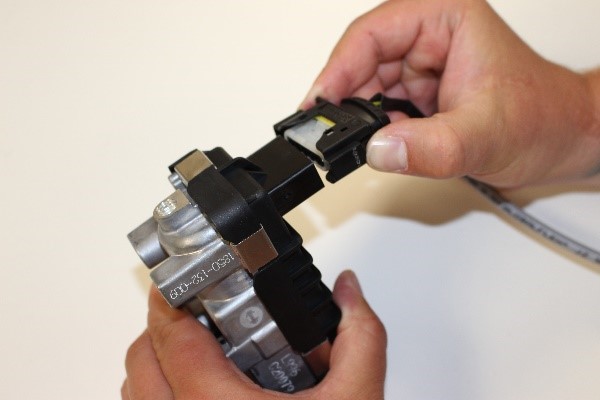
REA (Rotary Electronic Actuator) and SREA (Simple Rotary Electronic Actuator) electronic actuators are fitted to a variety of different variable geometry turbos and control the variable vane movement. The following questions provide answers to common REA/SREA issues.
What are the symptoms of possible electronic actuator failure?
There are a few factors which determine an actuator failure:
- Flashing engine management light
- A complete loss of power, causing the vehicle to go into limp home mode
- Low boost
- Over boost
- Noise from the turbocharger
- Fault codes
How to identify a REA/SREA connector?
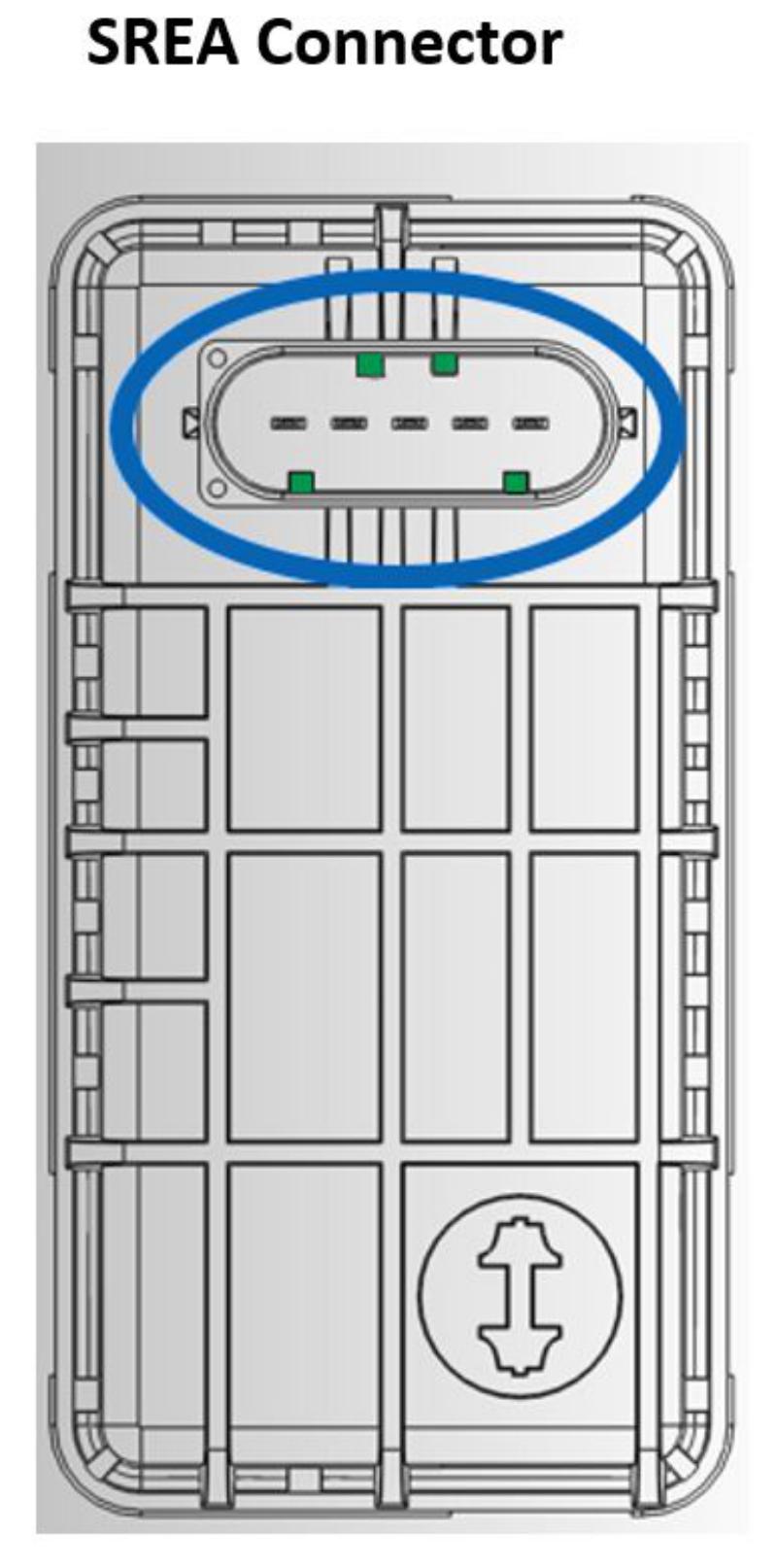
There are two types of Electronic Actuators. The two types (SREA/REA) can be identified by the different orientation of their connectors.
Please note: Avoid touching the connectors to reduce the risk of damage.
My diagnostic equipment has identified a fault with the turbocharger — is an electrical fault responsible?
Checking ECU error codes and researching these codes is critical and can help you identify the root cause very quickly. Turbos are on the same circuit as other sensors, and it may well be those at fault, not necessarily the turbo. We have seen examples of turbo faults being registered on the diagnostic tool where, upon investigation, the injectors were actually at fault.
Check the vehicle history for past issues, such as previously recorded ECU error codes and replaced engine components — especially those linked to the turbo.
With the engine turned off and cold, check if the linkage can be seen or felt between the SREA/REA (a small black box attached to the intake side of the turbo) and the bearing housing lever arm. If accessible, check for free movement at each end of the linkage — there should be a small amount of play. Also check for corrosion which may be restricting movement, and confirm the linkage is not detached at either end.
Please note: Use the locking tabs to release the electrical connector to avoid damage.
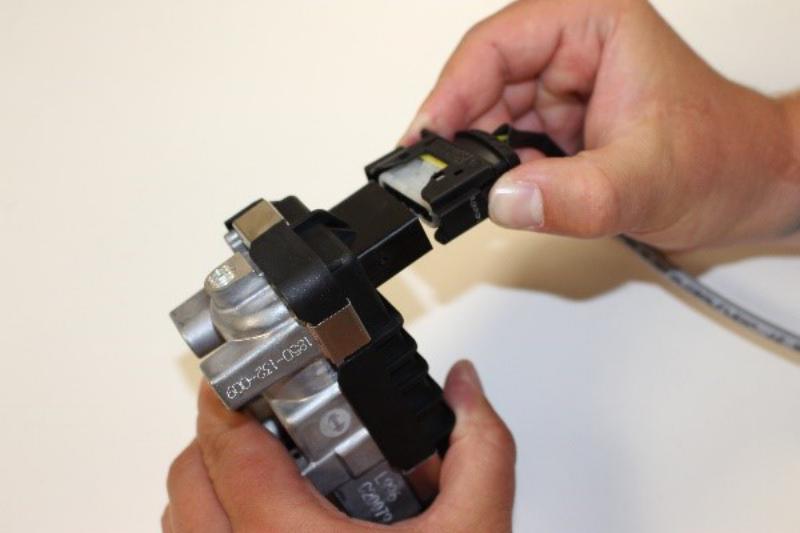
Further investigation:
- Is the REA/SREA electrical connector firmly located? Avoid pulling the wiring directly as this could cause damage.
- Are the locking tabs on the connector damaged?
- Are there signs of water ingress? Check for water or staining below the connector seal and in the REA/SREA connector (removal of the connecting wires is required to do this).
- Are the connector walls or seal damaged? Check the REA/SREA connector walls for damage or cracks.
- Are the wires within the harness connected properly and unused positions sealed?
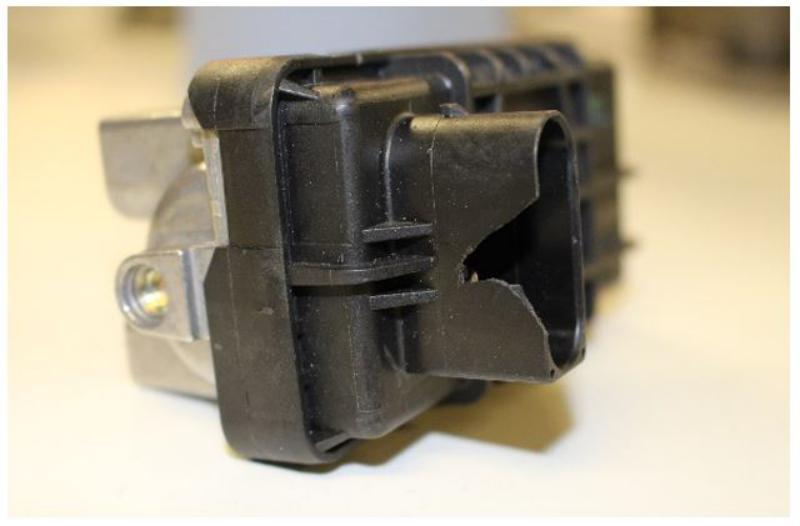
Check the REA/SREA connector wall for damage or cracks.
Finally…
- Switch on the ignition without cranking the engine — does the electronic actuator move freely? Note: some actuators will not move until the engine is running.
- Do any warning lights appear on the dashboard?
- Start the engine and again listen for actuator noise; if possible, visually check for movement of the actuator.
- Check again for any warning lights on the dashboard. If lights appear and movement of the actuator can be seen, there may be an electronic fault elsewhere on the vehicle.
- Switch the ignition off — the actuator arm should move rapidly to the "safe" position. On some occasions the actuator arm may continue its sweep to clear the nozzle vane path, depending on the application.
If the steps above have been followed and all connectors are in good condition, movement of the actuator is free, and there are no signs of water ingress, then it is highly likely the fault lies somewhere other than the turbo.
If the electronic actuator has failed, should I check the turbocharger?
It is vital to check the turbocharger even if the problem appears to be an electronic actuator-only issue.
SREA and REA actuators can fail because the variable geometry mechanism sticks due to sludging or carbon build-up. When this happens, it pulls a higher current through the motor than it is designed for, causing the motor to burn out or the plastic worm gears to fail. This restriction can reduce boost pressure and may result in the vehicle being put into limp home mode.
When repairing the electronic actuator, the worm gear and motor must be the correct ratio to avoid immediate failure. In most failures, the black cap and electronics within are unaffected by gearbox failure and can be reused.
If the actuator has failed to open the nozzle ring assembly vanes under acceleration, the turbo will also fail to operate efficiently. Vanes set to a closed position can cause choking of the engine or overspeeding of the turbine. Conversely, vanes that are open more than required will cause excessive lag and slow turbo response.
Are electronic actuators interchangeable?
SREA/REA electronic actuators are highly complex and intricate. They are not interchangeable with different gearboxes or black caps. The calibration settings are programmed in the software within the black cap and are unique to each individual turbocharger. Even loosening the retaining bolts on the actuator will take it outside of specification.
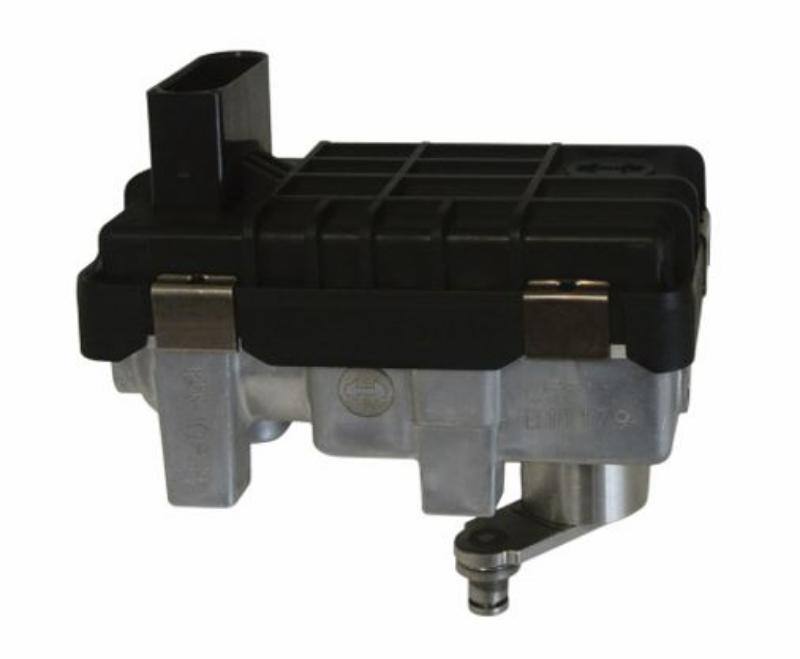
The black cap is damaged — can I repair it?
Each turbo is calibrated differently and the electronics within each cap are programmed specifically for that turbo, making it a non-serviceable part. In this instance you would need to replace the complete SREA or REA unit with the correct calibration settings. Incorrect calibration of the electronic actuator when assembled on the turbocharger can result in poor performance or complete failure.
Can I use solder to fix broken connections in the black cap?
Soldering to repair broken connections in the gearbox and black cap is not advised. Solder is susceptible to cracking in environments with temperature variance and vibration. For this reason, the motor, motor choke assembly, and connectors must not be spot welded.
What other factors can cause my actuator to fail?
Mishandling of the turbo
If the turbo connector is knocked or banged it will break, and the whole unit will need replacing.
Water ingress
The location of a turbo in the engine compartment can make the electronic actuator susceptible to water ingress. The actuator can become rusty and contaminated, giving incorrect signals and ultimately failing.
Board connectors
The wire connectors can expand and contract over time, eventually breaking and causing actuator failure. This fault can often go undetected during repair and workshop testing, as it may only become apparent once a temperature change occurs.
Engine vibration
Constant vibration from the vehicle can gradually wear the electronic actuator out, causing it to fail over time.
Go with the Flow… The need for an Air Flow Rig
06/21/2016
Go with the Flow… The need for an Air Flow Rig
There has been an ongoing debate for many years between the original turbocharger manufacturers and the turbocharger repair industry, over whether a turbo can be repaired.
This debate has been raging for over 10 years. Some OEM turbo manufacturers pulled out of the repair market around 2004 – at this time their argument was that most repairers did not have the correct specialist balancing equipment for the new higher speed turbos.
Over the last decade, vehicle technology has continued to improve to reduce emission levels in order to meet the Euro 4, 5 then 6 regulations. As a result of these changes, engine and turbo technology has increased in complexity, and the settings and control of advancements, such as the Variable Nozzles, have become more critical to the correct operation of the turbo.his is now presenting new challenge turbo repairers as the correct setting of the turbo on later models, now requires further specialist equipment in the form of an Air Flow Rig.
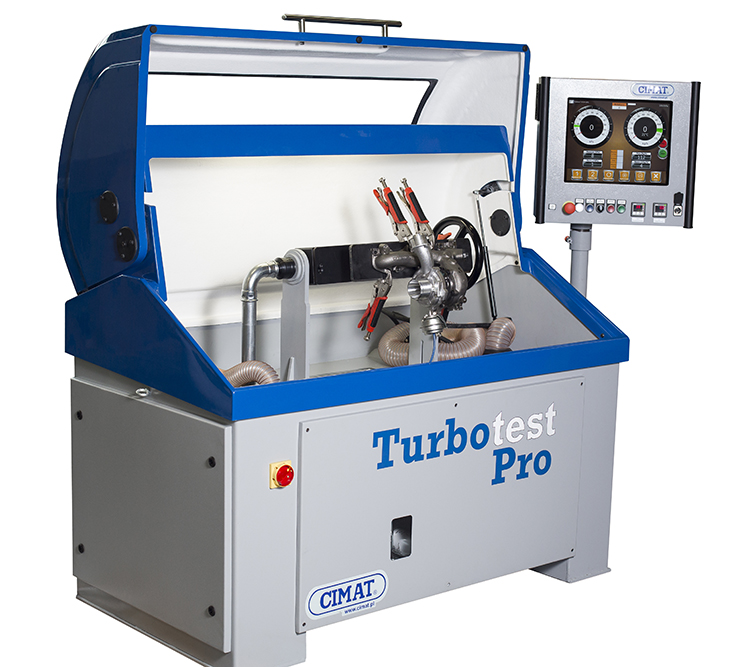
What is a Variable Nozzle Turbo?
When a turbocharger is matched to an engine, the Engineers have to balance the low speed response with high speed efficiency. The variable nozzle (also referred to as a variable geometry), is designed to change the exhaust gas inlet area with the engine speed to closely match the desired boost requirements of the engine. For low speed response, the nozzle vanes move to the 'closed vane' position to reduce the nozzle area – this increases gas speed through the turbo giving improved response at low engine speeds – similar to squeezing the end of a hose pipe to make the jet of water more powerful. As the engine speed increases, the actuator moves the nozzle vanes to the fully open position to maximize the exhaust gas flow.
Vane Setting Accuracy
When the first variable nozzle turbos were launched, it was a step change in turbocharging technology. Air mass sensors and ECU's were programmed to manage the whole engine system, however relative to the current engines, tolerances for acceptable air flow were set quite high. When setting up a new turbo, vane setting positions are set using accurate air flow equipment, which ensures that the 'minimum vane opening' position is set to allow a specific mass of air flow through the vanes. If the vanes are too closed, this can cause choking of the engine and overspeeding of the turbine. If it is set too large, the turbo will have too much 'lag' and not respond as well as it should.
Traditionally, turbo repair workshops did not use an air flow rigs to correctly set the flow. The actuator position was set based upon an accurate measured position of the actuator arm. This produced acceptable results and allowed the repairers to keep on repairing.
In reality, this method of setting the vanes can produce quite large inaccuracies in the flow of air. The actuator arm measurement is set against a cast finish on the bearing housing, the position of which is not accurately controlled during manufacture. However, as the engine would accept quite a large tolerance of air flow, the repaired turbo still performed well compared to the broken turbo which it replaced, so the vehicle owner was still happy with the results. On older turbo repairs, the variable nozzle position had to be a long way out before the performance was unacceptably affected or for the ECU to flag a problem. From an OEM perspective, this is not acceptable and is the reason for their lack of support of repairing.
The need for accurate air flow setting of turbos was well understood by reputable repairers, and hence some quality repairers developed their own air flow equipment to accurately set their turbos, resulting in a reduction in warranties and the ability to build on their reputation as a quality repairer.
Today's Turbos
In more recent years, as engines have improved to meet tighter Euro emission regulations, the control over the whole air / fuel system has improved dramatically. Many premium brand vehicles have moved to electronic actuation which gives positional feedback to the ECU. Some more advanced turbo controllers now sit within the CANbus talking directly to the injection system and air mass sensors, to respond more quickly to engine demands. For these turbos, the settings are either correct and accepted by the ECU – or not which results in warning lights, limp home mode or refusal to start.
As more of the Euro 5 compliant vehicles enter the aftermarket, problems will arise and for some turbo models, we have already reached the point where flowing the turbo is a necessity and only possible by workshops who have the correct equipment. However, this will naturally mean that older turbos also become more widely repaired using air flow equipment, which will bring further improvements to the market.
Making the Right Choice
Traditionally, in the turbocharger aftermarket the customer had a choice between a new OE turbo and a remanufactured turbo. Over the past 10 years the turbo repair market has changed significantly with the number of new repairers entering the market and the number of suppliers of parts. What we now have is three tiers, a new OE turbo, a high quality remanufactured turbo repaired using quality parts and the correct equipment, and a poor quality repaired turbo, using inferior quality low cost parts. There will always be a market for all three options depending upon the vehicle owner's requirements.
It is important that garages understand that there are different levels of quality for repaired turbos and therefore a different level of associated cost. When outsourcing turbo repairs it is crucial to consider the real cost of replacing a turbo and to educate your customer about the different options and associated risks for going lowest cost vs paying a little more for quality, so they can make informed decisions. Who pays for the time to fit the second replacement? What if it damages other parts of the engine?
Many turbo specialists already have a flow rig and are repairing turbos to an excellent standard. It is a fact that warranties are reduced when turbos are repaired using quality parts as well as the correct repair equipment.
Is The Price Right?
06/21/2016
Is the Price Right?
Today's automotive repair industry is faced with an overwhelming range of repair parts. Amid claims of exceptional quality at extraordinarily cheap prices, here Martyn Howorth, Sales Director, Melett Ltd., explores the reasons why some turbocharger components are offered at such low prices, and what the real cost of these low quality parts means to the repair industry.
Raw Material Costs & Global Pricing
As global demand for turbochargers increases, the raw materials used in the manufacture of the components are becoming more expensive. Raw material prices have conventionally been determined by the Global Price Index (GPI), with stockists adding their margin before selling to the mass market.
Using a turbocharger turbine wheel as an example, a major part of the cost of the turbine wheel is based upon the current market cost of Nickel – the main component of the Inconel material, plus the manufacturers mark-up. The price of an Inconel wheel will be agreed on a monthly basis, if the GPI increases by 3% for example, stockists reserve the right to charge more for the raw materials, therefore increasing the global cost for manufacturers. Nickel is a popular element used during the manufacture of many automotive components, and in particular turbine wheels, as it is able to withstand the tough operating conditions and extreme temperatures of a modern turbocharger.
The Quality Compromise
In countries where the market is saturated with many new parts suppliers, under cutting margins is now common practice resulting in companies selling low quality products at rock bottom prices. In China, for example, there is a limited supply of nickel, and therefore stockists in that marketplace can sell it at a premium, as a result this should be reflected in the market price of a turbine wheel. However, the way many manufacturers are producing turbine wheels at a lower cost is to simply use a lower grade of Inconel with less nickel. This will significantly reduce the wheels overall performance and durability, leading to unreliable repairs and premature failure. Historically, low cost manufacturers were only concerned with undercutting each other's margins, however in today's environment they are now forced to reduce the quality of the cast materials in order to compete with each other. As a result we are seeing a reduction in quality.
Understanding True Value
High quality repair parts will always hold a premium in comparison to the lower quality alternatives. It is important to understand the point at which cutting margins turns into reducing quality. Every component has a minimal price point and anything lower than that point can only be achieved by using lower grade raw materials in the manufacturing process.
Compressor Wheel Technical Changes
06/21/2016
Cast vs MFS Compressor Wheels
Machined from Solid' compressor wheels are the latest in a long line of developments from the OEMs to enter the aftermarket. Here we explore the evolution of the compressor wheel to determine if there are any benefits to using MFS wheels on standard cast wheel applications.
Cast compressor wheels are crucial turbocharger components. With over 15 million turbos produced globally each year they have provided the durability and dimensional precision that, up until now, the majority of turbocharger applications have required. If a cast wheel is used by an OEM there is no particular advantage to using an MFS wheel, unless there are known application issues that could affect the integrity of the compressor wheel.
Traditional Cast Aluminium Wheels
Traditionally, compressor wheels are produced from aluminium because of its low density weighing only one third of the weight of steel. It is also a relatively simple and inexpensive process to cast compressor wheels, but a major disadvantage is that cast aluminium is inherently not as strong as other manufacturing techniques. To create a stronger wheel post production processes are required, which include heat and solution treatments.
A high proportion of new turbochargers are spinning faster than ever before, with higher pressures, and as a result are subjected too much higher stresses which are beyond the limits of cast aluminium. Consequently, alternative materials and manufacturing processes are used.
If the compressor wheel material is not as strong as it should be it will eventually show signs of fatigue, because the blades are exposed to a continuous cycle of positive and negative stress caused by the wheel spinning fast and then slow.
Variations in Design
In response to the ever changing operating conditions there have been significant developments in compressor wheel design over the years.
Flatback:
Is the earliest design of compressor wheel and is still used by some manufacturers.
Superback:
This design was introduced due to the increased speeds that turbochargers rotate, which increases the force on the compressor wheel significantly. In particular the exducer diameter of the compressor wheel suffered the most. The Superback adds more material to the highest stressed area, therefore coping with higher loads.
Deep Superback:
An exaggerated design of the Superback which strengthens the wheel further by adding more material around the highly stressed hub.
Deep Superback – extended tip:
This design promotes greater airflow providing a faster boost response at lower engine speeds. The extended tip design increases the efficiency of the compressor wheel at higher boost pressures.
'Machined From Solid'
Taking the design process one step further, the OEMs introduced a new method of manufacturing compressor wheels known as 'Machined from Solid' (MFS), primarily due to cast aluminium not being strong enough for higher operating conditions.
By using a forged aluminium bar, it is possible to use a much stronger aluminium alloy than can be used in the casting process. By using a stronger material, the wheel has a much longer life in comparison to cast wheels as it can carry much higher loads.
In addition, MFS wheels are ideal for low production runs, enabling manufacturers to respond quicker to new blade design technology as there is no delay due to casting tooling. The wheels are produced using sophisticated 5-Axis technology to carve out the blades from a solid bar of high strength aluminium alloy, providing superior durability.
Each wheel is precision balanced on fully automated balancing stations with autocorrection – although the precision of the machining operation often means that the wheel doesn't need any balance correction. To create an even stronger wheel on specific high stress applications, titanium can be used, which prevents failure in applications susceptible to high cycle fatigue.
MFS and the Aftermarket
To conclude, if the OEM turbo is designed with a cast compressor wheel then there will be little or no advantage to using an MFS wheel other than if the application often suffers failure through fatigue – in which case an aftermarket upgrade would be appropriate.
RACH Turbocharger Remanufacturing Process
06/21/2016
RACH Original Remanufactured Turbos
"The RACH brand is synonymous with quality, performance, and reliability…We are bringing great value to the global aftermarket with our remanufactured turbo range.
"When replacing turbos, especially those from the technologically sophisticated VNT range, there's no need to risk poor performance or engine damage that may result from using non-original poorly assembled parts. With 'RACH Original Remanufactured' we provide another choice for the best possible support of a mature product line-up."
Precision Engineering
The complexity of a VNT turbo architecture is underlined by component tolerances that can be just 4 microns - the same as a particle of dust and 17 times smaller than a human hair - with rotational speeds reaching up to 250,000 rpm.
Technical Excellence
RACH is leveraging its unique technical knowledge and production know-how to deliver turbocharger units matching the engine management system requirements and emissions standards through its original assembly, calibration and balancing processes.
Complete Package
"With a RACH remanufactured turbo, everything is included - technical expertise and support, same warranty as a new turbocharger... and the peace of mind that comes from dealing with a world-leader in turbo technology."
Quality Standards
- Inspected to same standards as original new parts using original production drawings
- Re-assembled, balanced and calibrated to same specifications as original new parts
- Individually set up on a turbine flow bench exactly as new turbos
- Always fitted with new original components, such as actuators, compressor wheels, bearing systems, seals, O-rings, piston ring seals, bolts and clamps
- Updated with any components superseded since original design
GT1544V Turbocharger (PSA)1.6 HDi 110HP Engine Oil Carbonisation Problem
06/13/2016
Turbocharger Failures on the 1.6 110hp PSA Engine
Overview
We will describe the causes of turbocharger failures on the 1.6 110hp PSA engine widely used throughout the automotive industry. Failure of successful operation of the turbocharger can be caused by external influences and not faulty turbocharger components. In particular residual engine carbon/sludge penetrating the turbocharger and damaging it. This risk can be reduced by, ideally, removing all engine carbon/sludge, but often this is very difficult to do. However, risk can be reduced by following all the procedures set out below
Required Procedures
- Turbocharger oil feed pipe & banjo bolts must be changed
- Oil pump should be removed and checked
- Sump must be removed and cleaned.
- Check that engine has latest specification sump and dipstick.
- Oil strainer (pick up) must be removed and replaced due to residual carbon/sludge build up
- Oil cooler and filter assembly should be removed and cleaned
- Charge air cooler to be removed, cleaned thoroughly and any oil inside drained off
- Inlet and outlet hoses to be checked for damage and cleaned
- Exhaust system to be checked for contamination/blockage (Catalyst, DPF etc.)
- Vehicles with DPF: carry out static regeneration according to manufacturer's guidelines
- Brake vacuum pump to be removed and checked for debris/carbon - clean as necessary
- New oil filter and oil to be fitted
- Fuel injector gaskets to be checked as not burnt or compromised - replace as necessary
- Oil drain pipe checked for blockage/restrictions and cleaned as necessary
Oil Flow Check Procedure
Oil flow must be checked:
- Fit turbocharger to engine leaving oil return pipe off
- Install a longer oil return line and feed into suitable container
- Start engine and idle for 60 seconds, then switch off engine
- Measure volume of oil in container
- 60 seconds of idle should produce at least 0.3 Litres of oil
- Repeat test two or three times to confirm oil flow is correct
- During this test. do not allow engine to run below minimum oil level!!
- Vehicle should be driven 20 to 30 miles then the oil/filter and banjo bolt/filter must be changed
- Advise oil/filter and banjo bolt/filter are changed at 3000 mile intervals
WARNING
To reduce the risk of premature turbocharger failure by residual carbon/sludge, you must ensure you follow the above procedure. You should NOT fit the turbocharger where you know, or have reason to believe, that the risk cannot be overcome due to the possible age of the application and/or lack of service history etc. In these circumstances you must decide how best to prepare the application in order to avoid damage to the turbocharger once fitted.
About the PSA 1.6HDi, DV6TED4 Engine
The PSA 1.6HDi, DV6TED4 engine is a highly sophisticated low emission, high power diesel unit. It is used in many different applications; Citroen, Ford, Mazda, Mini, Peugeot and Volvo.
Due to the engine being clean and powerful, it is designed to operate at high temperatures, which demands the very best lubricants. These lubricants must be maintained in peak condition and PSA have fitted an in-line oil filter to the turbo and an integral oil cooler / oil filter to this engine to ensure this. However there is a drawback to this; reports in the field indicate that if the engine has been operated with the oil level below normal limits, this may potentially cause a high concentration of carbon in the oil. This may then lead to blockage of the in-line filter, oil cooler and main oil filter, which will eventually bring on premature turbo failure. The vacuum pump may also suffer from this same type of contamination.
However, due to its high operating speeds (230,000 revs per minute) the turbo will usually be the first to show signs of damage. This can happen from 30,000 miles onwards if the oil level and correct oil change intervals / procedure have not been adhered to.
Important Note: Experience to date suggests that the carbon build up in this application is particularly difficult to remove.
Get in Touch – We're Here to Help
Have questions? Our experts are ready to assist you!
